"Which battery chemistry should we use?" is usually the first question in any custom pack project — and the honest answer is always the same: it depends on what the equipment has to do. Here is a plain-language comparison of the two chemistries we build with, and the way we think about choosing between them.
NMC: the proven workhorse
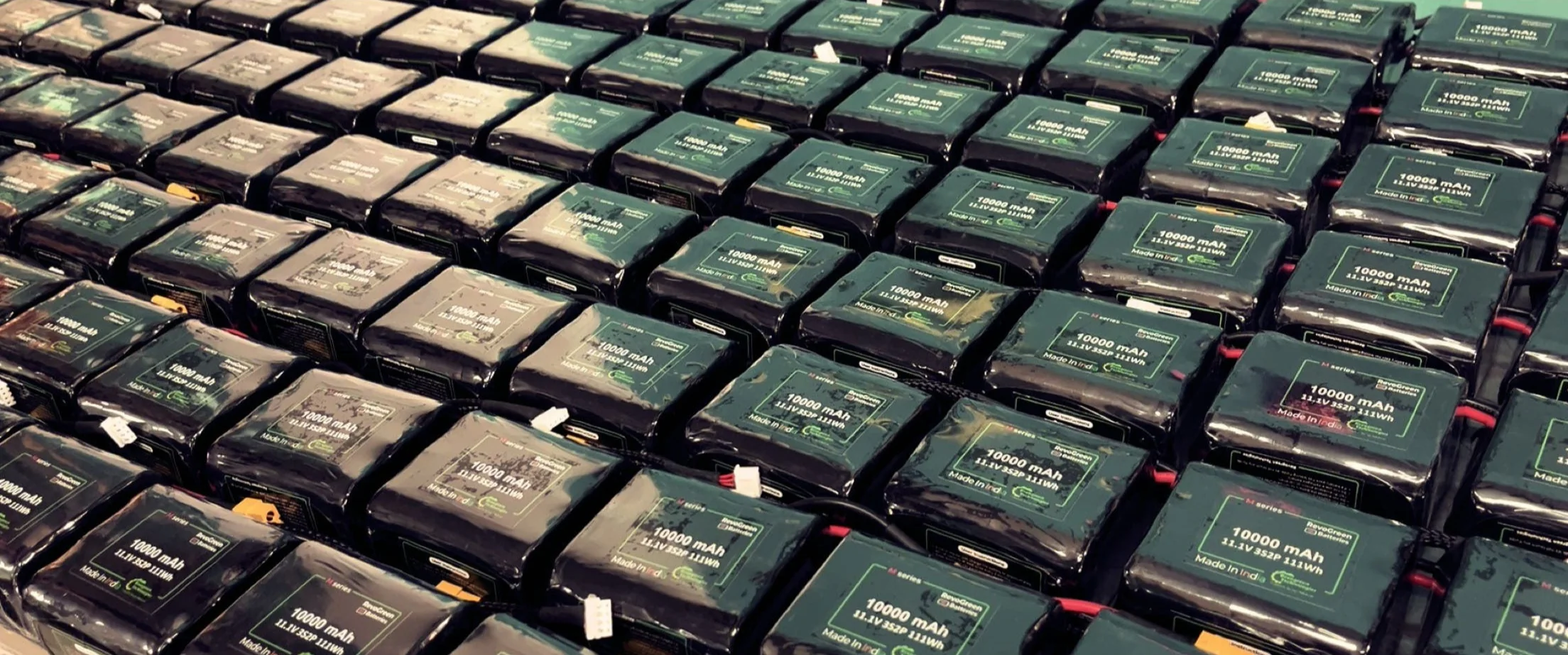
NMC (nickel-manganese-cobalt) lithium-ion is the chemistry behind most of the world's demanding battery applications, and for good reason. It offers strong energy density — meaning long runtime per gram — with mature, well-understood manufacturing and decades of field data behind it. It handles high discharge rates well, which suits propulsion loads, and it is the pragmatic choice when a program needs proven performance today. Most of the 30,000+ packs we have delivered for drones and UAVs, robotics, and defense platforms are built on it.
Solid-state: more energy, less to burn
Solid-state cells replace the flammable liquid electrolyte of conventional lithium-ion with a solid one. That change matters twice. First, energy density: more energy per gram, which translates directly into flight time, range, or a lighter load on someone's back. Second, safety: removing the liquid electrolyte removes the main fuel for thermal runaway, which is a meaningful advantage for equipment that flies over people, operates near personnel, or is carried on the body — the concerns at the heart of our man-portable equipment and delivery drone work.
How we choose between them
Start with the mission, not the chemistry. Endurance target, peak loads, weight budget, temperature range, and safety environment come first; the chemistry falls out of those numbers.
Weigh maturity against edge. NMC brings deep field history and cost-effectiveness at scale. Solid-state brings the performance and safety edge where the application justifies it. Many fleets run both — NMC for the workhorse missions, solid-state where every gram or every safety margin counts.
Remember the pack matters as much as the cell. Either chemistry still needs the right configuration (we build 2S to 28S), ruggedization, and a smart BMS matched to the cells — the topics we cover in what a BMS actually does. A great cell in a careless pack is still a poor battery.
Get the choice made for your numbers
At Revogreen Technologies, we engineer custom packs in both chemistries — cell selection, pack design, smart BMS, and charger as one system, designed and made in India. Bring us your requirements and we will run the comparison against your actual mission profile, not a generic table. That conversation usually starts with the questions in our complete power solution.
Looking for Custom Battery Solutions?
Revogreen Technologies designs application-specific battery systems for UAVs, defence, and industrial applications.
Get in Touch