Batteries for Defense UGVs: Powering Ground Vehicles That Can't Afford to Stop
An unmanned ground vehicle asks more of its battery than almost any other platform. It hauls real weight over rough terrain, so peak currents are brutal. It works full days, so endurance is measured in hours, not minutes. And when it stops moving to watch and listen, it must sip power silently — sometimes for a very long time. A battery that handles one of these well and the others poorly takes the whole vehicle out of the mission.
What makes UGV power different
High peak currents. Traction motors climbing a slope or pushing through soft ground draw current in sharp bursts. The pack must deliver those peaks without voltage sag that trips the drive electronics — which comes down to cell selection, pack configuration, and busbar design, not just capacity on paper.
All-day endurance with a mixed load. A UGV runs drives, sensors, comms, and payloads from the same pack, each with a different power profile. Sizing the battery for that mix — and managing it through a smart BMS — is what separates a vehicle that finishes the mission from one that turns back early.
Silent watch. On overwatch, the engine-free advantage of an electric UGV only holds if the battery can carry the sensor and comms load quietly for hours. That calls for low self-consumption electronics and honest state-of-charge reporting, so the operator knows exactly how long the vehicle can stay on station.
Vibration, shock, and dust. Ground platforms live in constant vibration with none of the smooth air a UAV enjoys. Packs need ruggedized mechanical design — secured cells, strain-relieved wiring, sealed enclosures — to survive it. These are the same failure modes we covered in why off-the-shelf batteries fail in defense equipment, amplified by the terrain.
How we engineer UGV packs
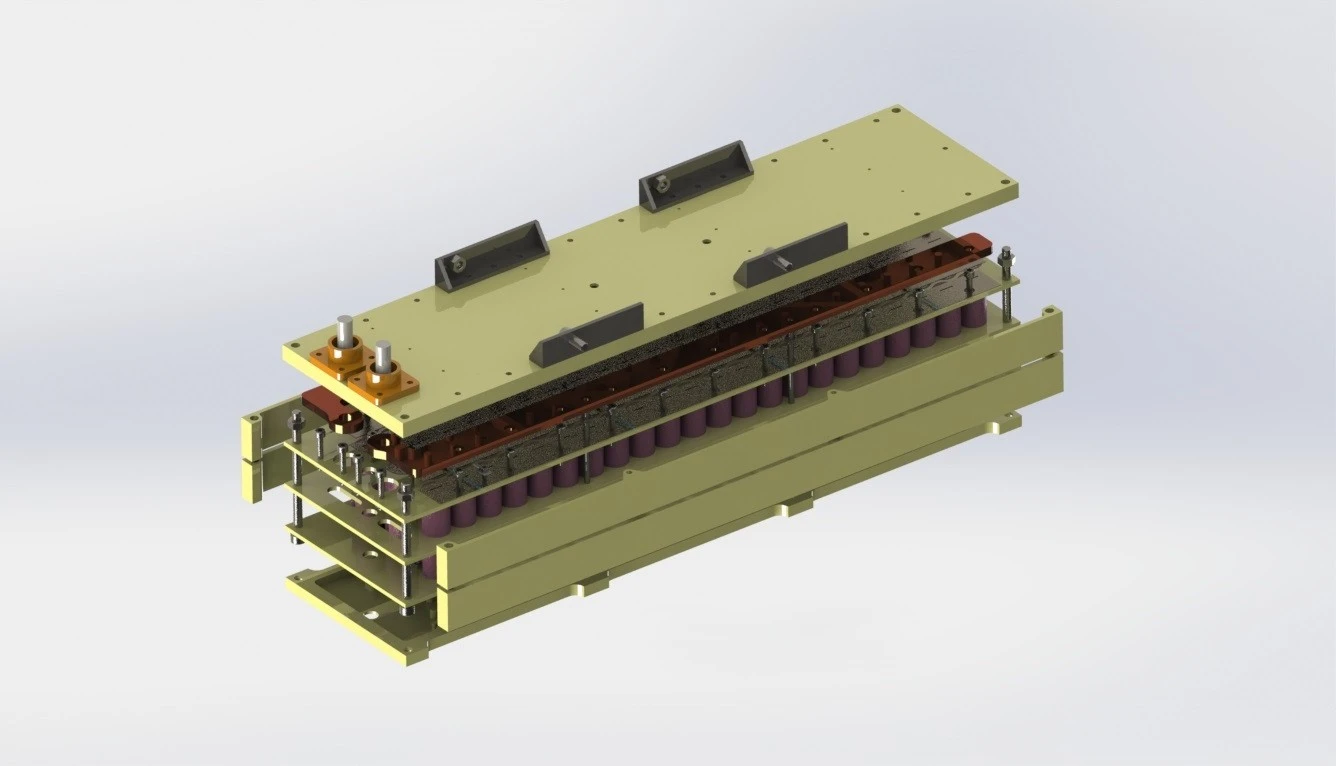
We start from the vehicle: peak and continuous current, duty cycle, silent-watch load, envelope, and connector standard. From there we build the pack around the platform — high-discharge cell selection in NMC or solid-state chemistries, 2S to 28S configurations, ruggedized enclosures, and a smart BMS with protection, balancing, and real-time telemetry your control station can read. The same engineering serves our robotics and autonomous systems customers, hardened for the defense environment.
And because the pack is only part of the story, we supply the charger and power management around it too — a complete power solution from one partner, so charge profiles, BMS, and battery are matched by design.
Made in India, built for the field
At Revogreen Technologies, we have delivered over 30,000 batteries for defense and aerospace platforms, drones, and autonomous systems — engineered and manufactured in India. If you are building a UGV and the battery is still an open question, we would be glad to close it with you.
Looking for Custom Battery Solutions?
Revogreen Technologies designs application-specific battery systems for UAVs, defence, and industrial applications.
Get in Touch